The Bare-Soil Myth: Why a Finished Garden Need Not Look Empty
The bare-soil myth treats every visible patch as a flaw. Learn when to leave soil open, add groundcover or place foliage for a composed border.
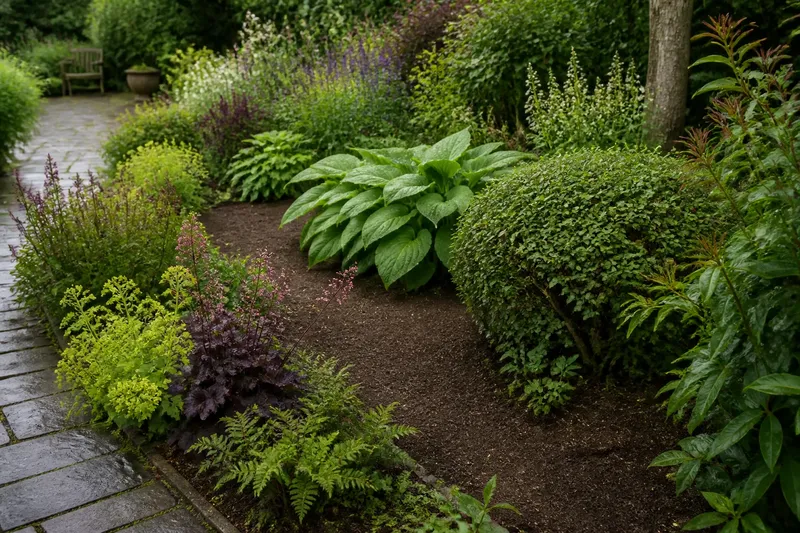
The bare-soil myth says every visible patch in a border is a mistake. That confuses a lack of planting with a lack of design: open soil can provide access, show off a plant’s form or create a pause, while other patches need groundcover or foliage. Decide what each space is for before trying to fill it.
Visible soil is not the same as an unfinished border
A border looks unfinished when its gaps seem accidental: they have no clear purpose, interrupt a planting group or leave a plant stranded. Visible soil can look deliberate when its shape relates to nearby plants and the bed, and when it serves a practical or visual role.
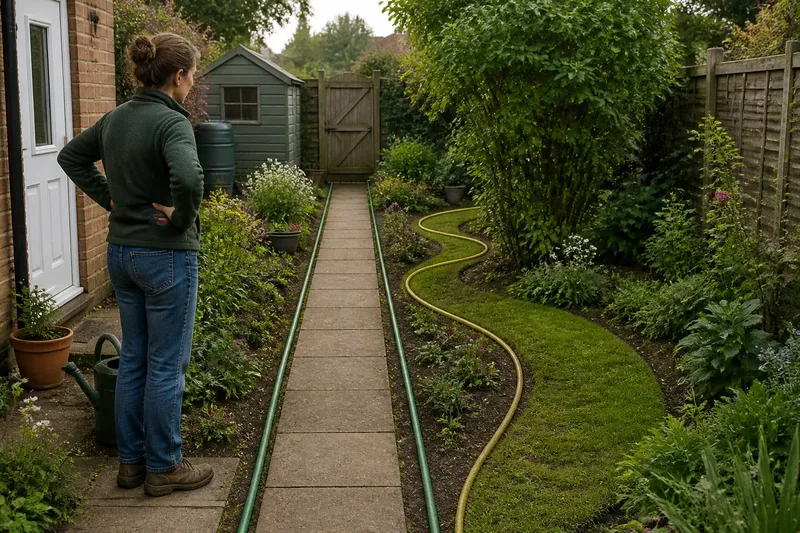
Read the bed from the path, a window or a garden seat. Notice whether a patch is temporary space around a young plant, an access route to a shrub, the open centre of an established perennial or a difficult spot beneath dense roots. Each calls for a different decision; covering them all would conceal useful differences.
Sketch the border and mark three kinds of space: places for foliage, places for groundcover and places to leave open. Add notes about sun, shade, damp soil, dry soil and where you need to reach in for care. This turns “it looks bare” into a more useful question: what should this particular patch do?
Choose open soil for access, contrast and breathing room
An open patch earns its place when it gives a focal plant room to read clearly, separates contrasting leaves or leaves a route for pruning and other routine care. Give the patch a discernible shape that follows the bed or relates to the plants around it; an irregular hole with no clear purpose is more likely to look accidental.
Say you have a broad-leaved perennial beside a low shrub, with exposed soil between them. You need to reach the shrub and want the perennial’s outline to remain visible, so you mark a curved access opening on your sketch and leave it unplanted. From the path, the soil now separates the two forms; if it looks like an unrelated hole, reshape the edge or decide whether a low plant could do the job without blocking access.
Keep working space clear rather than threading small plants through it. If a softer edge suits the border, let nearby leaves overlap part of the opening while preserving a direct route to the shrub.
Use groundcover where a low, continuous layer helps
Groundcover suits a patch that should recede beneath the main planting rather than remain as a visual pause. It can link neighbouring plants, but a spreading habit may crowd seedlings, hide a plant’s outline or cross onto a path.
Before choosing a plant, check the light and moisture at soil level, the competition from established roots, and the mature spread and growth habit on its label or nursery information. Choose a plant that fits those conditions and stays low enough for the foliage you want to feature to remain visible. If the patch needs regular access or you want to monitor new planting, keep it open instead.
Leave room between young groundcover plants rather than packing them together to hide every trace of earth immediately. Watch the edge as the plants grow; if they move towards a path or crowd a neighbour, trim or divide them using guidance suited to that species.
Place foliage to give the border a clear structure
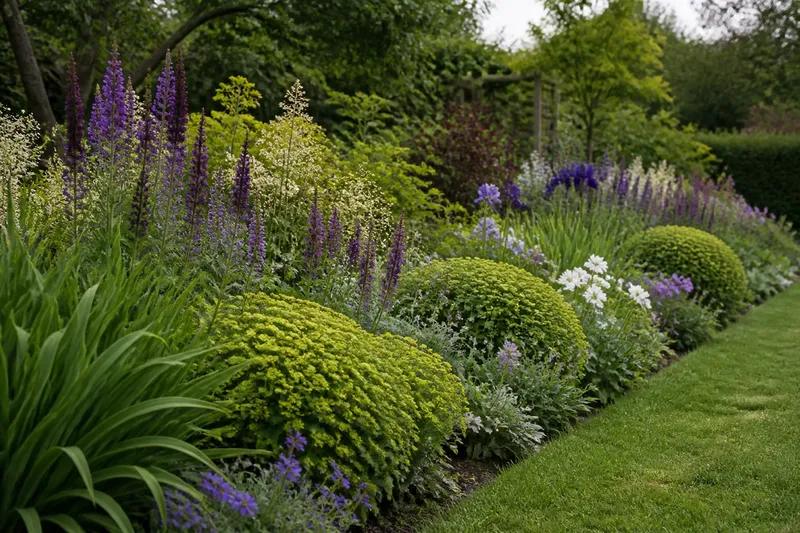
Foliage can make a border feel occupied without forming a continuous mat. Arrange plants in groups that give the larger forms room, then use lower or finer foliage where the composition needs a softer link. Visible soil between clumps is not a flaw if the groups still read as connected parts of the same bed.
Set plants out in their pots before planting and view them from the main approach. Check whether one plant hides a shape you want to keep visible, whether neighbouring leaves will compete for space, and whether a gap has a purpose. Move the pots until the planting reads as a connected group rather than a row of isolated specimens.
Some plants emerge or die back at different times. Leave space for later foliage where the seasonal sequence makes sense, and judge the gap after the main plants have developed. If it still feels disconnected, add a suitable plant rather than filling it automatically in spring.
How do you decide what to do with a bare patch?
Should every gap be planted in spring?
No. Early gaps may allow emerging shoots to show and may disappear as established plants grow. Keep a gap that provides access or a deliberate pause; consider planting only if it remains disconnected after the main foliage develops.
How can visible soil look intentional?
Give it a clear outline and a reason, such as access to a shrub or space around a focal plant. If the patch has neither a practical role nor a clear relationship to nearby planting, reshape it or choose foliage or groundcover that fits the site.
What should happen to gaps when plants die back?
Decide whether stems or seed heads add useful winter structure before cutting them back. If the exposed ground makes the border feel disconnected, retain nearby evergreen foliage or add a suitable low plant; do not cover a space that still serves as access.
How do you keep groundcover out of neighbouring plants?
Check its growth habit before planting and keep its edge visible as it spreads. If it approaches a path or crowds a neighbour, trim or divide it according to plant-specific care guidance; if regular control would be awkward, choose a less assertive plant or leave the patch open.
Use a quick observation checklist before changing the bed
- Check whether the patch is needed to reach a shrub; if it is, leave a clear route, but if it is not, consider foliage or groundcover.
- Check whether a focal plant’s outline disappears among neighbouring leaves; if it does, open space around it, but if it remains clear, keep the existing planting.
- Check the light reaching the soil; if it differs from the conditions required by your proposed plant, choose a better-matched plant or leave the patch open.
- Check whether the soil stays damp or dries quickly; if the proposed groundcover does not suit that condition, choose another option, but if it does, set it out with room to spread.
- Check the proposed groundcover’s mature spread on its label or nursery information; if it could cross a path or crowd a neighbour, select a less assertive plant or keep a defined open edge.
- Check whether the gap is temporary while established plants emerge; if it is, wait and reassess after their foliage develops, but if it remains disconnected, add a suitable plant or reshape the opening.
- Check whether the patch has a distinct outline that relates to the bed; if it does, keep it open for its stated purpose, but if it does not, reshape it or let suitable foliage occupy the space.
Review open patches as the seasons change
Return to the border as foliage emerges, reaches its fullest growth and begins to recede. Check whether open soil still provides access or contrast, whether groundcover is crossing its intended edge, and whether plants are hiding one another. Change only the parts whose role has shifted.
If a patch needs more cover, move a suitable plant from elsewhere in the garden or choose one matched to the light and soil. If it needs more room, divide or reposition a clump at a suitable time for that plant. Follow the plant label or grower’s guidance where hardiness, spread or care requirements affect the choice.
The bare-soil myth treats visible earth as a verdict, but it is only a cue to look more closely. Keep soil open where it gives access, contrast or breathing room; use groundcover where a low layer helps; and place foliage where a gap breaks the connection between groups. A border feels finished when each patch has a clear role, not when every inch is hidden.