A Late-Winter Look at the Garden’s Structure
A late-winter garden structure walk helps you record how plants, walls and materials hold their shape, so you can make informed seasonal garden plans.
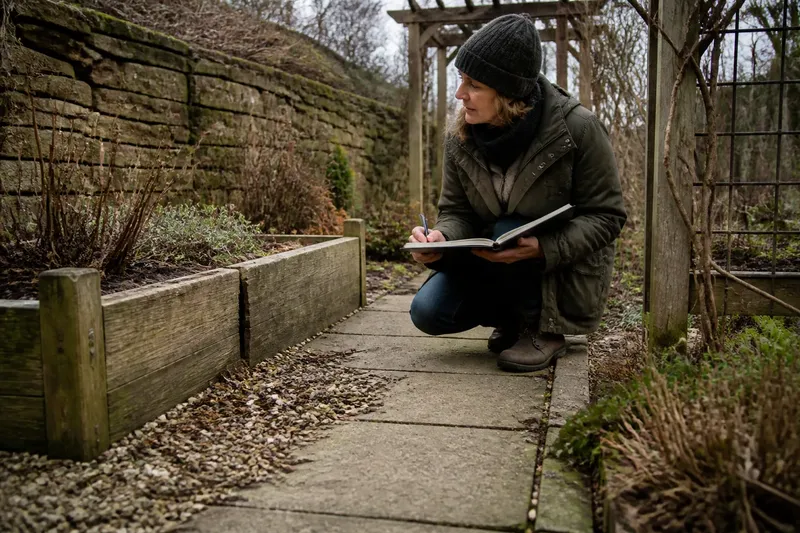
A late-winter garden structure walk helps you see which plants, walls and materials still give the garden form before new growth appears. Choose a dry spell and inspect the fixed elements closely: their condition and relationship to nearby planting can be easier to read when foliage is sparse.
Inspect walls, edging and built features
Start with the condition of permanent features rather than the view between them. Look along a retaining wall for loose stones, open joints, leaning sections or soil pressing over the top. Check raised-bed boards for rot or splitting, and note whether edging remains secure where it meets a path.
Look at trellises, arches and pergola posts where they meet the ground. A post that has shifted, a loose fixing or a corroded support may need attention before climbing plants put on new growth. Do not climb on garden structures or try to move a heavy wall; if a structure appears unstable, keep clear and consult a qualified professional.
For each feature, write down its material, location and visible condition. “Timber bed, north end, board split beside the corner” is more useful than “bed needs work”.
Check whether materials meet cleanly
Examine transitions between paving, gravel, soil and planting. Look for gravel migrating onto paving, soil washing over an edge, or a gap where a border has pulled away from a hard surface. These observations can help you decide whether to replenish, contain or simply monitor the material.
Check timber for soft patches and metal for flaking coatings or rust. Note whether stone or brick joints have opened, but avoid scraping or probing a damaged area if that could loosen it further. For a feature that supports soil or borders a drop, seek qualified advice if you see movement or cracking.
Imagine a raised bed with gravel spilling onto the adjacent paving and one board that looks split. You note both locations, keep the path clear, and check whether the board is loose without leaning on it; if it moves or the bed wall is bowing, you leave repairs to a suitable professional, while the loose gravel can be swept back only if the edge is stable.
Decide which observations need action
Use a short record to separate routine upkeep from signs that call for caution. For every item, note what you can see and the decision that follows:
- Observation: a trellis fixing is loose but the frame remains upright. If the fixing is accessible and the frame is stable, plan a suitable repair; if the frame shifts or leans, keep clear and ask a qualified professional to assess it.
- Observation: gravel has spread across a sound, level path. If the edging is intact, sweep the gravel back; if the edging has failed, note the gap and repair or replace the boundary before replenishing gravel.
- Observation: a raised-bed board has a small surface split and stays firm. If it remains stable, record it for routine maintenance; if it is soft, loose or bowing, avoid loading the bed and seek suitable repair advice.
- Observation: a retaining wall has a new crack or visible movement. If the wall is unchanged and sound, keep it on your seasonal record; if it is shifting or the crack is widening, keep away and contact a qualified professional.
- Observation: a metal support has surface rust but feels secure. If the coating is intact apart from a small patch, note it for appropriate maintenance; if the metal is weakened or the support moves, replace or repair it before relying on it.
- Observation: soil is washing over a border edge after rain. If the bed and boundary are stable, note where the soil escapes and plan to contain it; if water is undermining a wall or structure, keep clear and seek professional advice.
Record details that will help with seasonal care
Use a notebook or phone to record the feature, its location and the visible issue. A photograph taken from a consistent position can help you compare a crack, loose fixing or material boundary later, but do not treat a single image as proof that a structure is safe.
Keep notes factual: “path-side trellis post moves when touched” is clearer than “trellis looks poor”. Avoid testing a suspect wall or post by pushing, climbing or adding weight.
How should you inspect garden structures in late winter?
What should you check on a retaining wall?
Look for leaning, loose material, open joints, cracking and soil or water pressing against the wall. If you see movement or a change in a crack, keep clear and ask a qualified professional for advice.
How do you tell whether a timber bed needs attention?
Look for rot, splitting, loose joints and boards that bow under the soil they hold. If a board remains firm, record routine maintenance; if it is soft, moving or distorted, avoid loading it and arrange an appropriate repair.
Should you repair a loose trellis yourself?
Only consider routine fixing work when the frame is stable, the fixing is safely accessible and you can work without climbing or putting weight on the structure. If the trellis leans, shifts or supports a heavy climber, keep clear and seek qualified help.
What is useful to photograph or write down?
Record the feature’s location, material and visible condition, then photograph it from a safe, repeatable position if that helps you compare later. Note changes rather than relying on memory, and leave suspect structures untouched.
Make one clear plan for the next visit
Choose a single follow-up action for each note: monitor, carry out straightforward upkeep, or seek professional advice. Keep the garden undisturbed until you have made that decision, especially near a wall or support that may be unstable.
A late-winter garden structure walk is useful when it leaves you with a precise record and a safe next step. Write down the feature and what you observed, then revisit the note before seasonal work begins.